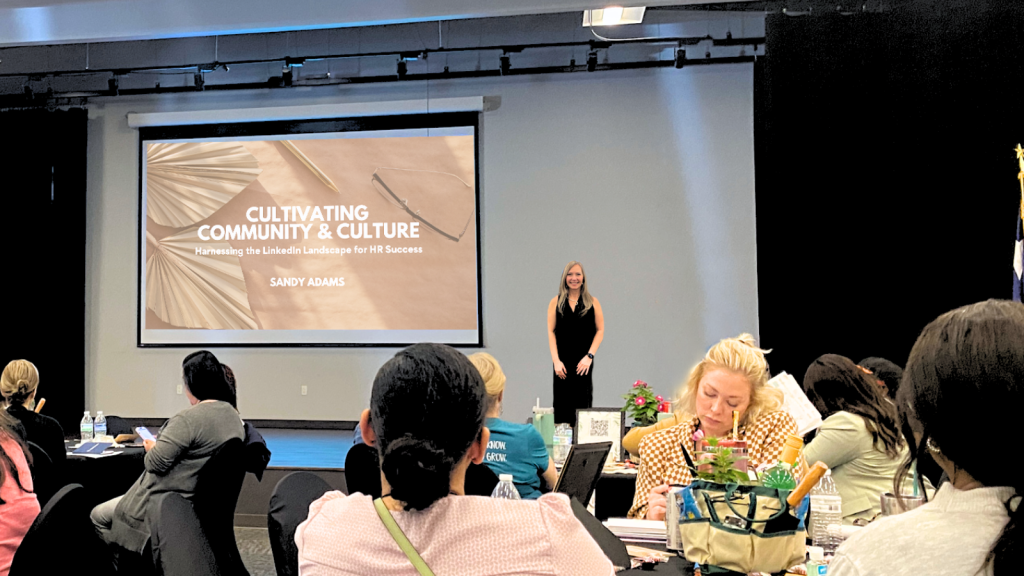
Recently, I had the opportunity to return to Houston and step onto the stage as the keynote speaker for the 2024 Texas Bay Area SHRM Annual Conference.
The room was filled with HR professionals who spend their days thinking about people, workplaces, recruiting, retention, employee engagement, and all the things that ultimately shape how people experience an organization.
My keynote, “Cultivating Community and Culture: Harnessing the LinkedIn Landscape for HR Success,” focused specifically on LinkedIn. But the bigger conversation was really about something that extends far beyond any social media platform: culture and how we communicate it.
Culture Doesn’t Stay Inside the Building
For years, we thought about workplace culture primarily as something employees experienced once they walked through the door. Today, people begin forming an opinion about an organization long before their first interview.
They see what employees say. They notice which stories companies choose to tell. They pay attention to how leaders communicate, how organizations respond to people, and whether what they see from the outside matches what they’ve been told.
LinkedIn was the lens for my keynote because it gives organizations—and particularly HR teams—an opportunity to make their people visible. Instead of simply posting another job opening, they can show potential employees what it’s actually like to work there.
Who are the people behind the company? What are they accomplishing? What matters to them? What does leadership look like inside the organization? What happens there that someone would genuinely want to be part of?
Those stories matter.
Your Employees Are Already Telling Your Story
One of the points we explored during the keynote was the role employees play in shaping an organization’s reputation.
People trust people.
When employees share their experiences, celebrate their coworkers, talk about projects they’re proud of, or simply give someone a glimpse behind the scenes, they’re communicating something about the organization that a polished recruiting campaign can’t always capture.
That doesn’t mean turning employees into walking advertisements. In fact, that’s probably the fastest way to make the whole thing feel forced.
It means creating a workplace people genuinely want to talk about.
When people feel valued, connected to the work, and proud of what they’re accomplishing, those stories tend to happen naturally. And when the experience inside the organization matches the story being told outside of it, you begin building something much more valuable than visibility.
You build trust.
Communication Is Part of Culture
This is one of the ideas from that keynote that has stayed with me.
We often talk about communication and culture as if they’re two separate things. They’re not.
How leaders communicate during change affects culture. How employees receive feedback affects culture. How achievements are recognized affects culture. How difficult conversations are handled affects culture. Even what an organization chooses not to communicate can shape how people feel about working there.
Culture isn’t created by a statement hanging on the wall. It’s created through hundreds of interactions people experience every day.
Social media simply gives the outside world a window into some of those interactions.
HR Has a Powerful Voice in That Story
HR professionals sit in a unique position because they see an organization from so many different angles. They understand what attracts people, what makes them stay, what causes frustration, what employees celebrate, and often what needs to change.
That perspective is incredibly valuable.
When HR works alongside leadership and communications to tell genuine stories about the people behind an organization, LinkedIn becomes more than a recruiting platform. It becomes another place to strengthen relationships, recognize employees, share expertise, attract talent, and communicate what the organization actually values.
But the platform isn’t really the point.
Whether the conversation happens on LinkedIn, in a team meeting, during onboarding, or between a leader and an employee, the same principle applies: people pay attention to what an organization consistently communicates and what they consistently experience.
When those two things match, you have the foundation for a much stronger culture.
A Conversation Worth Continuing
I left the Texas Bay Area SHRM conference thinking about how much the workplace continues to change—and how important the human side of leadership has become.
Technology will change. Platforms will change. The way we recruit and communicate will continue to evolve. But people will still want to feel valued. They’ll still want leaders they trust. They’ll still want to know their work matters and that they’re part of something worth contributing to.
That’s why conversations about communication and culture aren’t going anywhere.
A huge thank you to Texas Bay Area SHRM for inviting me to be part of the conference and to David Potts, Deborah Estrin, Sherri Osterlund, and Renee Ethridge for making the experience such a welcoming one. And a special thank you to Brittany Tapp for capturing the moments on stage.
The keynote may have started with LinkedIn, but the bigger message was about people.
And ultimately, that’s where culture starts.
👉 Contact me >>HERE<< I’d love to empower your next audience.